Jubilee Hills, Hyderabad
 Tradition, Technology, Transformation


27 November 2026
How Cambridge Schools Balance Academic Excellence with Extracurricular Activities
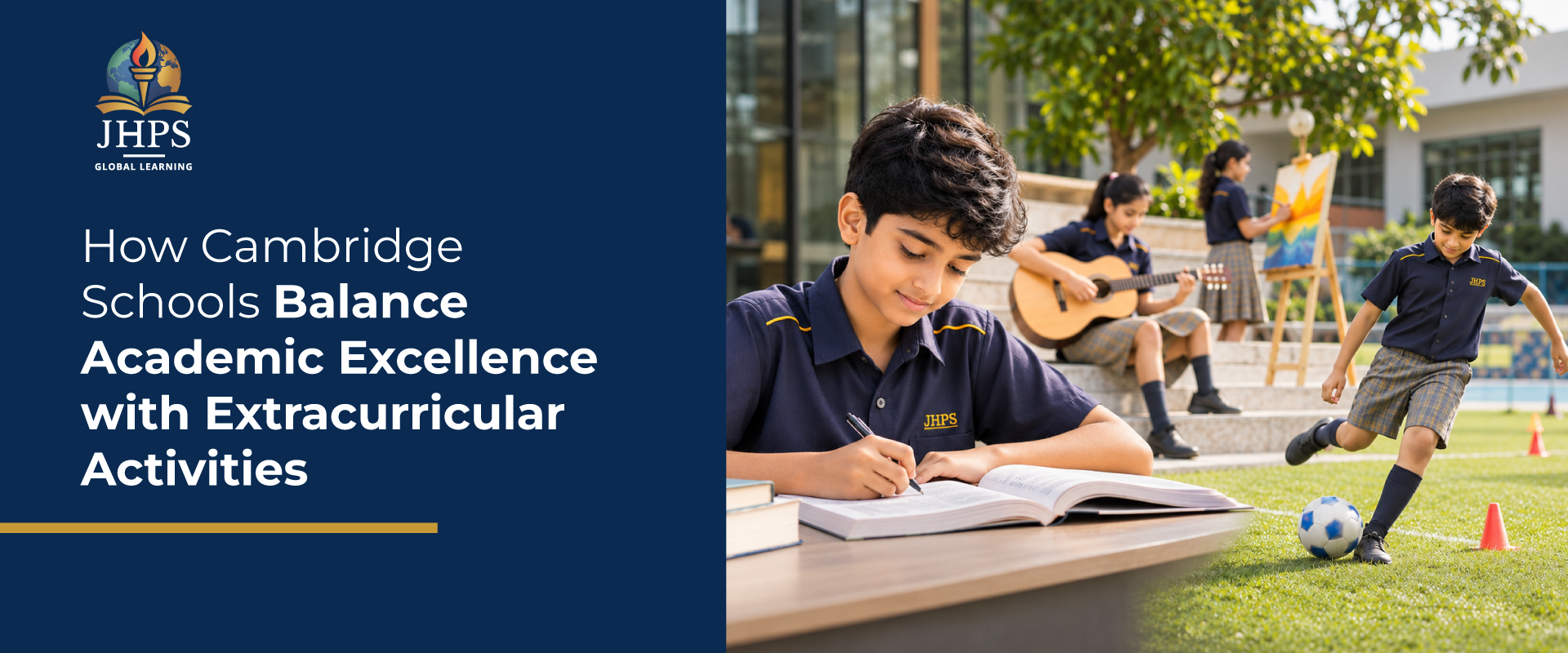
A child's school life should be about more than finishing chapters and preparing for the next test. Lessons also happen outside the classroom. Playing with friends, trying a new activity, learning to dance, or simply taking part in a group project can teach things that a textbook probably cannot.
This is something Cambridge schools try to bring into everyday learning. Studies are important, of course, but children also need time to look at other interests. Getting these two sides right is not always easy. Too much academic pressure can leave little room for anything else, while too many activities can make children tired. So, where does the balance come from?
Good Academic Learning Is Not Just About Marks
There is a difference between a child who remembers an answer for a test and one who actually understands the subject. Cambridge learning places importance on the second.
Children are encouraged to ask questions, share what they think, and try to work things out rather than simply wait for the teacher to give them an answer. A science lesson, for example, can become much more interesting when children get to see an experiment instead of only reading about it.
This approach gives academic excellence a slightly different meaning. It is not only about marks or completing the syllabus. It is also about whether a child can understand an idea and use it somewhere outside the classroom.
Why Activities Deserve Their Own Space
Some children love their science lessons. Others would happily spend an afternoon drawing, dancing, swimming, or playing football. And sometimes, a child who is quiet in class becomes surprisingly confident during a group activity.
That is one reason extracurricular activities, sports, and creative sessions should not be treated as something extra that children get to do only after their studies are finished.
They offer different learning experiences. Playing a team sport teaches children to work with others. Music gives them a chance to express themselves. Even a simple art activity can teach patience when something does not turn out as expected.
Not every child will enjoy the same things, and that is perfectly fine. Having different choices matters.
Making the School Day Work for Children
A school cannot simply keep adding activities to an already busy day. There has to be some thought behind how everything fits together.
A sensible timetable schedule gives children enough time for classroom lessons, physical activities, creative sessions, and breaks. It also avoids making every hour feel like another task to complete.
Children need a little breathing room during the day. After sitting through lessons, moving around or doing something different can make the rest of the day feel less tiring. It is not about keeping them occupied every minute. Sometimes, a little unplanned time is useful too.
Different Activities, Different Experiences
Not every useful lesson comes from a subject book. Some children learn by speaking, some by making things, and others by watching and trying something themselves.
This is where co-curricular activities become part of the learning experience. The types of co-curricular activities offered at school can introduce children to interests they might not otherwise discover.
For example, children may take part in:
Quizzes: Quizzes are a fun way to test what they know, think on the spot, and become comfortable speaking up.
Social science club: A social science club is a place to discuss people, places, history, and things happening in the world.
Creative arts: Drawing, painting, and making things give children room to experiment.
Computer science: Helps them become familiar with technology and basic problem-solving.
Dance and music: Give children another way to express themselves and enjoy learning.
Some activities may become long-term interests. Others may just be something a child enjoys for a few weeks. Both experiences are worth having.
Keeping Up With Studies Without Adding Pressure
Parents sometimes worry that spending time on activities might affect academic performance. It is a reasonable concern, especially when children have different learning needs.
This is where regular academic monitoring helps. Teachers need to notice more than just test scores. A child may be doing well in written work but struggling to follow a lesson, or may understand a topic but hesitate to answer in class.
Keeping an eye on these small things makes it easier to offer help at the right time. It also means children do not have to wait until an examination to discover that they need extra support.
The purpose is not to track every little thing a child does. It is to understand how learning is going and make changes when needed.
How JHPS Global Learning Brings Both Together
At JHPS Global Learning, we believe that children should have a chance to enjoy school while learning things that prepare them for the future. We bring the Cambridge Curriculum together with opportunities to understand science, technology, creativity, sports, and the arts. Our learning environment includes STEM and Robotics Labs, a Space Lab, a Maker's Lab, modern classrooms, and dedicated spaces for music and performing arts. We also encourage participation in physical education, aerobics, creative arts, computer science, library skills, and contemporary dance. With individual attention and a focus on each child's development, we want to make room for different interests and abilities. We believe children need more than academic preparation. They need opportunities to try, make mistakes, learn from others, and gradually find what they enjoy.
Final Words
A child does not have to be the best in class and the best on the sports field at the same time. Nor should every activity become another competition.
Some children will discover their interests early, while others may need time. A school that gives them opportunities to look at different things makes that process easier.
Cambridge schools aim to bring academic learning and activities into the same school experience. When lessons are engaging, activities are varied, and children receive support when they need it, neither side has to be pushed aside.
And perhaps that is what a balanced school day should look like. Children learn, play, try something new, make friends, and come home with more than just completed homework.
Frequently Asked Questions
How do you balance academics with extracurricular activities?
Prioritize studies, schedule fixed time for each activity, and pick only the extracurriculars you can manage without sacrificing academics or rest.
What matters more, GPA or extracurriculars?
GPA usually matters more as a baseline, but strong extracurriculars can set you apart once your grades are solid.
What are the positive effects of extracurricular activities?
Extracurricular activities build teamwork, time management, confidence, and new skills while improving focus, social connections, and overall well-being.
What skills do students gain from studies and extracurriculars?
They gain time management, teamwork, leadership, and confidence.
Where can students find activities that match their interests?
Through school clubs, sports teams, arts programs, and activity fairs run by their school.
Related Blogs
27 November 2026
Why Creativity and Innovation Are Important in a Child's Learning JourneyContinue Reading

16 October 2026
Admission Process For Cambridge Schools In Hyderabad: Age Criteria, Documents, And TimelineContinue Reading